Blockchain systems do not fail quietly for long. A slow endpoint, expired certificate, unstable connection, or missed heartbeat can interrupt transactions, hide service issues, and chip away at trust before the team has a clear picture of what changed.
That is why blockchain monitoring needs to go beyond a simple uptime check. With UptimeRobot, teams can watch the parts that matter most, from websites and APIs to SSL, keywords, ports, and cron jobs, so they can spot trouble earlier and react with less guesswork.
This article looks at where monitoring adds the most value across crypto websites, exchanges, nodes, and related services, then shows how to get more out of the checks you already run. The goal is not more dashboards. It is better coverage, faster response, and fewer surprises when something drifts or breaks.
ork and cron job monitoring, and more, all catered to meet the needs of the cryptocurrency community.
Monitoring crypto websites and ICO pages
Keeping crypto-related websites and ICO pages running smoothly 24/7 is essential. These sites often face cyber threats and need consistent uptime to function effectively.
Website monitoring
Maintaining the uptime and performance of crypto websites is absolutely essential for reliability and user trust. Companies that provide offshore blockchain development services embed monitoring tools at the first project stages. Website monitoring encompasses various aspects to ensure continuous operation.
- Uptime monitoring: Regular checks to ensure your website is up and running, minimizing downtime.
- SSL/TLS Certificate monitoring: Checks that certificates are up-to-date and alerts you before they expire or if there are changes affecting security or availability.
- Response time monitoring: Measures how quickly your website responds to requests, helping to identify performance issues.
UptimeRobot specializes in website monitoring, try it today and get 50 monitors totally free!
HTTPS monitoring
To maintain secure and encrypted connections, HTTPS monitoring is a must-have for crypto websites. This helps protect sensitive transactions and user data and keeps the site reliable and secure.
- Why it’s important: Continuous HTTPS monitoring helps safeguard user trust by providing top-tier data confidentiality.
- How it works: This monitor type regularly checks your site’s SSL/TLS certificates, making sure they are up-to-date and compliant with the latest security standards. You’ll get alerts before certificates expire, and notifications if there are any changes that could affect your site’s security or availability.
Looking to keep an eye on your SSL certificates? We’ve got you covered.
Keyword monitoring
Keyword monitoring is an extremely useful tool for staying updated on ICO pages and cryptocurrency platforms, providing critical information to stakeholders.
- For crypto users: Monitors content changes in the HTML code of websites to alert users about new ICOs or significant crypto news. Keywords like “token release,” “funding goal achieved,” “ICO closing date,” and “regulatory update” are a few good examples of what to monitor.
- For website owners: Ensures maximum uptime for validation nodes or other blockchain services. By monitoring keywords such as “system upgrade,” “new feature,” and “wallet update,” stakeholders can quickly respond to developments, safeguarding their interests and maintaining engagement with the cryptocurrency ecosystem.
By setting up specific alerts for these keywords, stakeholders can quickly respond to developments, safeguarding their interests and staying engaged with the cryptocurrency ecosystem.
Did you know UptimeRobot also does keyword monitoring?
Network and power connection stability
In the world beyond the screen, monitoring your power connections and network stability is another key aspect. Doing so helps prevent issues that could lead to devastating financial losses or data integrity compromises.
Top risks:
- Financial losses: Downtime can result in missed transactions and lost revenue.
- Reputation damage: For those running validation nodes, consistent uptime is vital for maintaining credibility and trust within the crypto community.
- Operational disruptions: Network instability and power failures can halt operations, affecting overall business performance.
Keeping a close watch on these elements allows you to promptly address any issues, and helps keep continuous and reliable operations.
Network monitoring
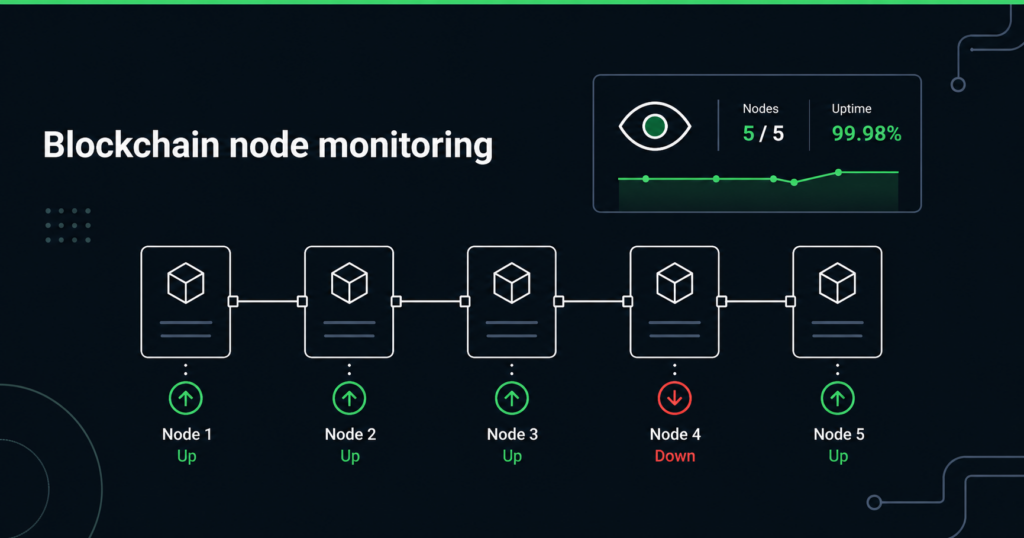
Unsurprisingly, cryptocurrency operations rely on continuous network connectivity. Any downtime can stop trading, delay transactions, and increase security risks.
Ping monitoring: Using a simple ping monitor, you can identify irregularities or disruptions in network traffic. This allows you to react swiftly, often before users notice any issues.
Port monitoring: Additionally, UptimeRobot can monitor specific ports to ensure essential services like APIs and trading platforms remain accessible. Port monitoring helps detect any issues with the availability of these critical services, allowing for immediate response and resolution.
Using both ping and port monitoring lets you keep continuous network connectivity and reduce the risk of interruptions that could affect your cryptocurrency operations.
Heartbeat monitoring
Heartbeat monitoring, also known as cron job monitoring, helps maintain the stability of cryptocurrency mining and trading platforms. This method checks if systems are functioning correctly by ensuring they send regular signals.
How it works: Devices or scripts send periodic requests to your monitor’s endpoint. If it doesn’t receive these signals, it indicates a potential issue (such as a power or Internet outage) and sends an alert, allowing you to take immediate action.
This type of monitoring is commonly used to monitor the power or Internet connections of crypto mining setups or validation nodes. For more details, check out heartbeat monitoring.
Importance of cron jobs in cryptocurrency
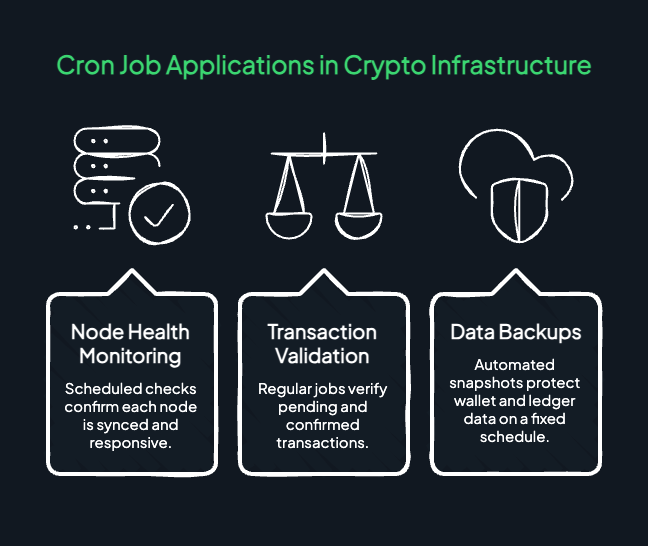
Cron jobs are essential for various cryptocurrency operations, particularly for crypto users and node owners:
- Node health monitoring: Automates the checking of node health and status, ensuring nodes are operational and connected.
- Transaction validation: Assists in the regular validation and recording of blockchain transactions to maintain an updated ledger.
- Data backups: Schedules regular backups of important data to prevent loss and facilitate recovery.
Using heartbeat/cron job monitoring helps keep your cryptocurrency activities running smoothly and securely.
Monitoring exchanges
Exchanges need to operate flawlessly to handle the high volume of trading transactions. Monitoring exchanges ensures they are always available, responsive, and secure, maintaining trading efficiency and protecting against potential security breaches.
Guidance on monitoring setups: You can monitor API endpoints, transaction speeds, and user interfaces of exchange platforms. Custom alerts can notify you immediately if there’s a disruption or significant performance change, allowing for rapid response to maintain continuous service and security.
Using comprehensive monitoring strategies for networks, power supplies, wallets, and exchanges lets cryptocurrency operators reinforce and improve their operational resilience, providing a secure and well-working trading environment for their users.
Are you finally ready to give UptimeRobot a try and take your monitoring to the next level?
Monitor wallet and transaction activity, not just uptime
Blockchain monitoring should not stop at websites, ports, and node availability. Those checks tell you whether systems respond, but they do not tell you whether funds arrived, confirmations stalled, or a wallet moved unexpectedly.
Start with the addresses that matter most to your operation. For exchanges, payment flows, and treasury activity, that usually means deposit wallets, hot wallets, cold wallet bridges, and settlement addresses. Track inbound transfers, outbound transfers, failed transactions, and balance changes that fall outside normal patterns.
Confirmation depth matters too. A transaction can appear on-chain before it is safe to act on. Set one alert for first detection, then another when the transaction reaches the confirmation count your team requires for crediting, settlement, or internal approval. This is especially useful when different chains have different confirmation norms and finality times.
It also helps to separate routine activity from exceptions. Large withdrawals, transfers to new addresses, repeated failed broadcasts, and long pending states should stand out fast. That gives your team a shorter path from alert to action, whether the issue is congestion, a node problem, or suspicious activity.
Tie these checks back to the systems users see. If deposits are arriving on-chain but balances are not updating in the product, the problem is probably off-chain. If the site is up but confirmations are stalling, the issue may sit with the node, the mempool, or the chain itself.
This extra layer closes a blind spot that uptime checks cannot cover. Infrastructure monitoring shows whether services are reachable. Wallet and transaction monitoring shows whether blockchain activity is actually moving the way it should.
Best practices for effective monitoring
Here’s how you can effectively integrate and utilize monitoring tools to make your strategies strong and reliable.
Tip: For more detailed information about all the do’s and don’ts, make sure to peruse our post on the Best Blockchain Monitoring Practices.
Integration of monitoring tools
To safeguard every facet of your cryptocurrency operations, your monitoring setup must be comprehensive.
It should cover all key components such as websites, wallets, network connections, APIs, and response times.
Integration of these tools ensures no aspect of your system is overlooked, providing a holistic view of your operational health.
Configuration and customization
Finetune your monitoring tools to meet the specific needs of your cryptocurrency operations. Customize dashboards and alerts to focus on critical metrics like transaction processing times, wallet accessibility, and API responsiveness.
- Short monitoring intervals: Opt for shorter intervals, such as 30 seconds or 1 minute with UptimeRobot’s paid plans, or 5 minutes with free plans.
- Notification integrations: Better responsiveness with integrations for various notification channels, like Slack, Telegram email, and more. For more details, check out our notification integrations.
Effective configuration helps quickly identify anomalies and potential threats, making for faster response times.
Proactive monitoring
Adopt a proactive approach by setting alerts for potential issues before they escalate. Monitor system loads, transaction volumes, and activity logs to anticipate problems.
Analyzing trends and patterns allows you to predict and mitigate risks more effectively, maintaining the reliability and integrity of your cryptocurrency operations.
Regular audits and updates
Regularly audit your monitoring strategies and tools to see that they remain effective as your platform evolves. Update your monitoring parameters and thresholds to adapt to new threats or changes in network architecture.
Keeping your monitoring tools updated and audited helps maintain their efficiency and responsiveness to the dynamic nature of cryptocurrency technologies.
User training and awareness
Be sure that your team is well-trained in using monitoring tools and understanding the insights they provide.
Regular training sessions can help your team recognize early signs of issues and enable effective troubleshooting, and keep them up to date on the latest security threats and monitoring techniques.
-
Blockchain monitoring, in this context, means monitoring the websites, APIs, nodes, and supporting infrastructure around a crypto service. It is less about reading on-chain data and more about verifying uptime, security, connectivity, and operational health. The goal is to catch outages, degraded performance, or risky changes before users feel them.
-
Track phrases that signal meaningful changes, such as
token release,funding goal achieved,ICO closing date,regulatory update, or wallet and system update notices. The best keywords are specific enough to reflect a real event, not generic words that appear all the time. Before using any keyword, make sure it is actually present in the page HTML your monitor can read. -
HTTPS monitoring helps verify that secure connections are working and that SSL or TLS certificates have not expired or changed unexpectedly. That matters more on crypto-related sites because users expect secure access for wallets, exchanges, and transaction flows. A certificate problem can quickly turn into a trust problem, even if the site itself is still up.