If you run a validator node on a proof-of-stake network, a few minutes of downtime can cost real money. Miss your slot and you risk getting slashed, and the people who staked with you lose out too. Blockchain node monitoring is how you keep uptime high and those penalties off the table.
This guide covers why node monitoring matters, how to set it up with UptimeRobot, and how to prove your reliability to delegators with a public status page.
Why is blockchain node monitoring important?
Blockchain networks thrive on the principles of transparency, decentralization, and immutability. For participants and stakeholders, the integrity and performance of blockchain nodes are non-negotiable.
Effective monitoring serves as the backbone of these systems, enabling sustained functionality and providing insights into optimization opportunities.
The main reasons why you should keep an eye on your node are:
- Preventing earnings loss: Each minute your node is down, potential earnings vanish. Nodes that are offline fail to validate transactions or participate in the creation of new blocks. For validators, this directly translates to a loss of transaction fees and rewards.
- Maintaining network health and security: Your node’s uptime directly impacts the blockchain’s resilience and trustworthiness. Effective monitoring ensures that your node contributes positively to the network, upholding both its performance and security.
- Block creation and timely transaction processing: Validators with consistent uptime can create new blocks and process transactions without delay.
- Preventing penalties: In a PoS system, validators stake their own coins as collateral to partake in the consensus process. Many protocols have implemented slashing mechanisms, where the staked tokens are at risk of being reduced if the validator node goes offline or acts maliciously. High uptime minimizes the risk of you being slashed.
- Attracting more delegators: It’s important to showcase your reliability and maintain a reputation to show everyone they can contribute their tokens to your stake pool, increasing potential rewards for you as a validator.
Thanks to reliable uptime monitoring you’ll be able to jump on any issues immediately when they arise thanks to live alerts.
How to monitor your nodes with UptimeRobot
Most blockchains use chain validators that operate daemons on their nodes for transaction confirmations, and blocks rely on network communication through specific ports.
These daemons are essentially software programs running in the background, listening for transactions and blocks to validate. They play a critical role in maintaining the blockchain’s integrity and security by ensuring all transactions and blocks adhere to the network’s rules before being added to the blockchain.
Here’s a simplified breakdown of how it works:
1. Communication through ports
Blockchain daemons communicate over the network using designated ports. These ports allow data transmission between nodes, facilitating the process of transaction and block validation.
Validators must ensure these ports are open and accessible for communication, but at the same time, secured against unauthorized access.
2. Transaction broadcasting
When a new transaction is created, it’s broadcast to the network. The daemon, through the open port, receives this transaction and begins the validation process according to the predefined rules of the blockchain.
3. Block proposal and validation
Periodically, a new block containing several transactions is proposed to be added to the blockchain. Validators’ daemons then work to confirm the validity of the block and its transactions.
This may involve cryptographic checks, verifying identities, and making sure no double-spending has occurred.
4. Consensus Mechanism
For a block to be added to the blockchain, validators have to reach a consensus. This process varies between blockchains (Proof of Work, Proof of Stake, etc.), but ultimately it ensures only valid blocks are added to the chain.
5. Network Synchronization
Once a block is validated and added to the blockchain, the update is propagated across the network. Validators’ daemons synchronize with each other to update their local copies of the blockchain, providing consistency and reliability across the network.
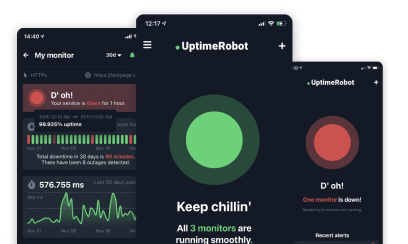
UptimeRobot allows you to continually ping these servers or ports, making sure they’re accessible all the time. The shorter monitoring intervals you use, the better the chances that you’ll notice any incidents before the losses grow.
By receiving live alerts from up to 16 notification channels including e-mail, SMS, Voice call, push notifications, or third-party native integrations like Telegram, Discord, Slack, PagerDuty, Splunk On-Call, Zapier, MS Teams, Google Chat, Pushbullet, Pushover, or webhooks, you’ll be able to jump on the solution right away.
Set up free port and IP monitoring
UptimeRobot is a cloud-based uptime monitoring solution, meaning that whatever happens to your server, you’ll receive an alert about the issue.
The free plan allows you to send requests to any publicly available IP address or port every 5 minutes, but as mentioned before, we recommend using the shortest intervals possible to minimize the damage.
Get 1-minute Monitoring Intervals for just $7.
- If you don’t have a UptimeRobot account, create one using just your email address for free. There are no limits and you’ll be able to keep this account for life.
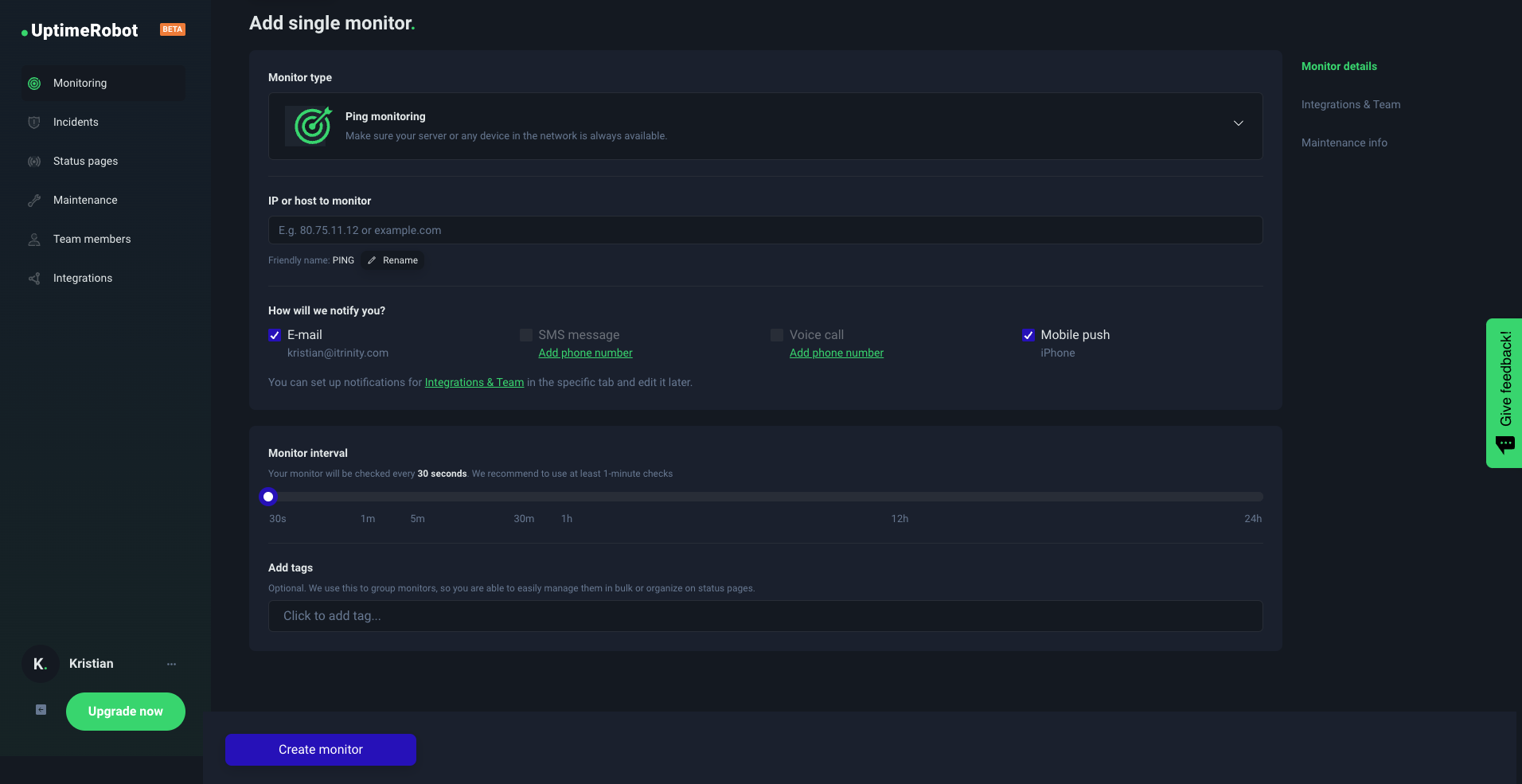
- Log in and click on the blue button “New monitor”. From the dropdown “Monitor type” menu choose “Ping monitoring” or “Port monitoring”.
- Add your IP for the “Ping monitoring” or URL/IP and port for the “Port monitoring” and choose your preferred way to be notified.
- Set the desired length of monitoring intervals and add tags if you need to group your monitors, and that’s it! Click on the blue “Create monitor” button and leave everything else to us.
Showcase your uptime to delegators
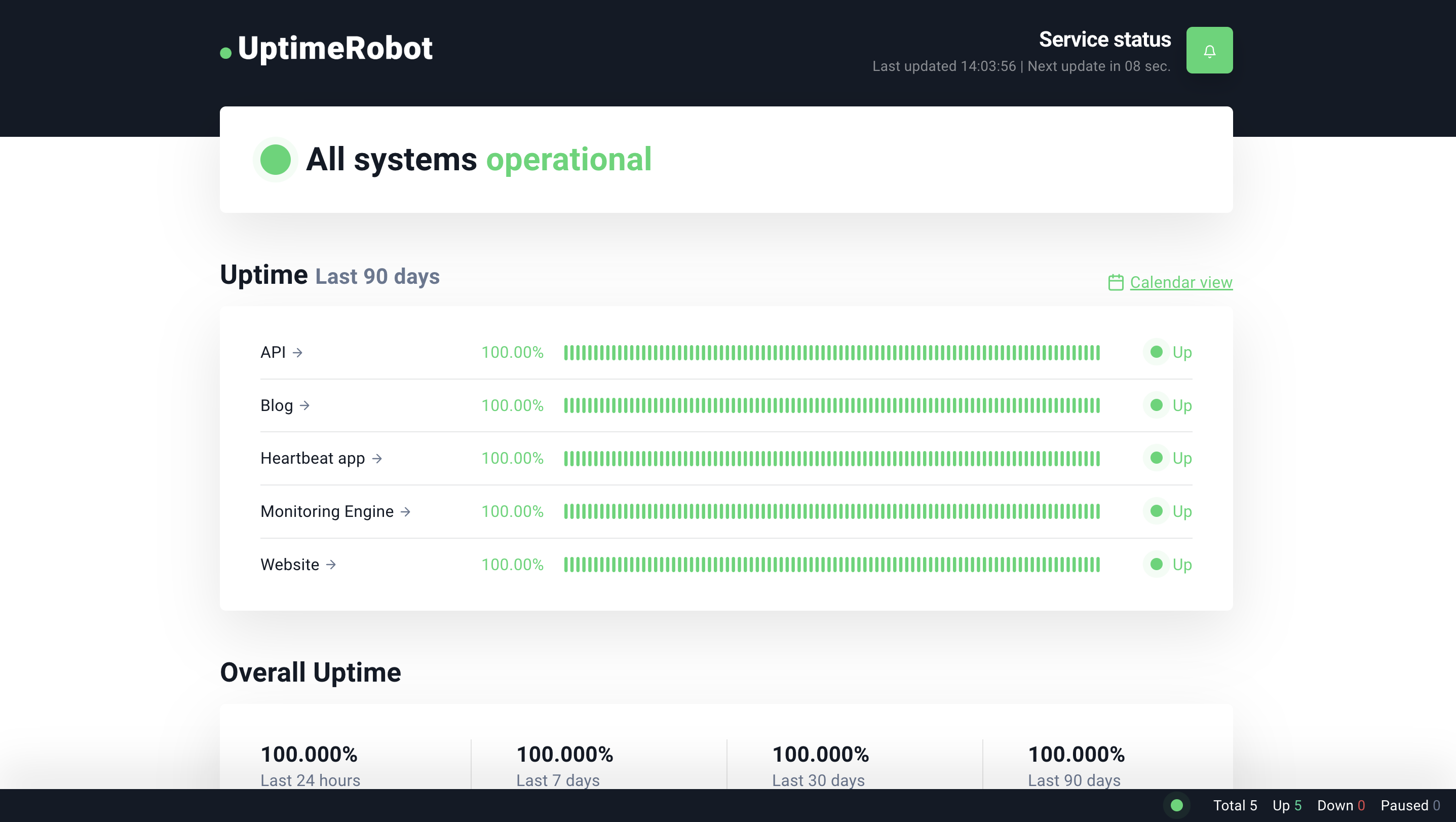
After you create your uptime monitors, adding a status page and sharing it with everyone is a great step to showcase your reliability and attract more users to contribute to your pool.
For example, Everstake, one of the biggest crypto staking service, is sharing the current status of their services through a custom status page.
You can prepare a public (or private) status page with UptimeRobot too, and even customize it to your liking or let everyone subscribe to updates via email.
Take a look at the detailed steps in our comprehensive guide to status pages in 2026, it will take you just a few clicks!
Metrics worth tracking beyond uptime
Uptime is the headline number, but it isn’t the whole picture for a validator. A node can be online and still miss its job. Track these alongside basic availability:
- Attestation and block-proposal rate. Whether your node is actually performing its duties, not just answering a ping.
- Missed slots. The clearest early sign of trouble, and what slashing risk is built on.
- Sync status and peer count. A node that falls out of sync or loses peers is heading toward downtime.
- Response time from multiple regions. Validators serve a global network, so check from more than one location.
Watch the basics with UptimeRobot, then pair it with your client’s own metrics endpoint for the consensus-level numbers. A public status page that shows this history is the simplest way to earn delegator trust.
Summary
Mastering blockchain node monitoring is essential for maintaining a healthy blockchain network. As we have seen, the integration of tools like UptimeRobot into your monitoring strategy can play a pivotal role in safeguarding your node’s uptime, which helps protect your earnings and contributes to the overall integrity and performance of the blockchain.
The journey towards a more secure and efficient blockchain ecosystem is ongoing, and through diligent monitoring and optimization, we can all contribute to its success.
Remember, the strength of the blockchain lies in the collective effort of its participants. By adhering to these monitoring practices, you are both securing your own interests, as well as reinforcing the blockchain’s foundation for everyone involved.
-
On most proof-of-stake networks you stop earning rewards while you’re offline, and prolonged or repeated downtime can trigger slashing, where a portion of your stake is removed. Delegators staking with you are affected too.
-
Aim as close to 100% as you can. The exact slashing thresholds vary by network, but the practical target is to miss as few slots as possible, which means monitoring and alerting that reach you within seconds.
-
Yes. You can monitor a node’s RPC endpoint, port, or health URL and get alerted the moment it stops responding, then publish the uptime on a public status page for your delegators.
-
Slashing is a penalty on proof-of-stake networks where a validator loses part of its staked tokens for going offline for too long or breaking consensus rules. Reliable monitoring is the first line of defense against it.